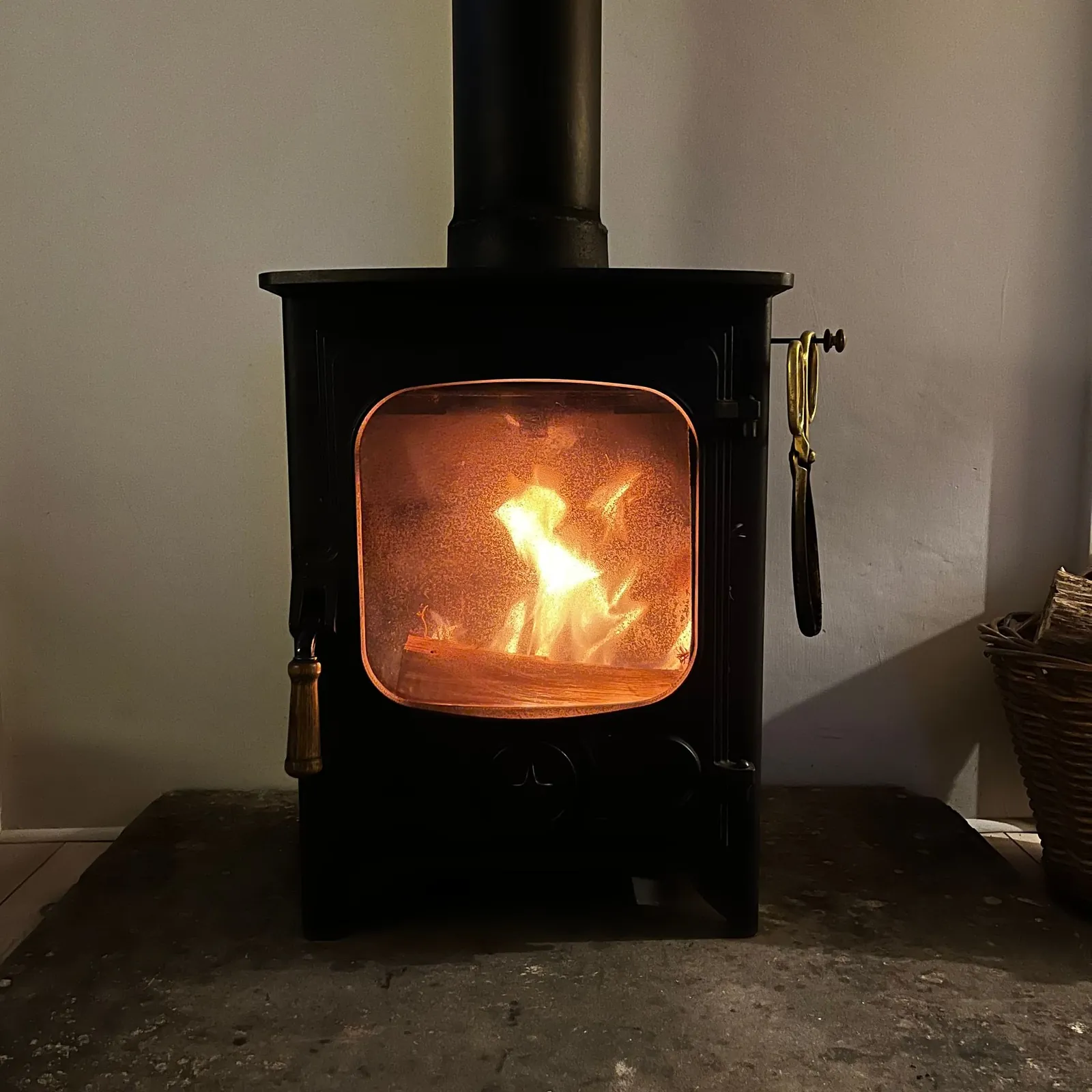
What should I know about wood stoves in Sussex, Warren and Hunterdon?
Northwest New Jersey is the state's wood and oil corner: 3.9% of Sussex homes heat mainly with wood. A new stove goes through your town's construction office, there is no federal stove tax credit for 2026 installs, and a typical install runs $3,000 to $8,000.
New Jersey Chimney Co. · October 17, 2026
Why wood stoves cluster here
Across New Jersey, wood is the main heat for only 0.3% of homes, according to the Census Bureau's 2024 American Community Survey. The northwest is different. In Sussex County 3.9% of homes, about 2,258 of them, heat mainly with wood, the highest share in the state. Hunterdon is at 2.2% (about 1,130 homes) and Warren at 1.1% (about 507). Many more burn wood as a second heat source.
These are also oil counties. Sussex heats 48% with oil and only 20% with utility gas; Hunterdon and Warren are each about 25% oil. Where there is no gas main, a wood or pellet stove is a way to burn less oil, and many homes here have a stove next to an oil boiler.
It is also the coldest corner of the state. NOAA's 1991–2020 normals for Newton, in Sussex County, show about 142 nights a year at or below freezing and nearly 6,000 heating degree days, with an average winter low of 20 degrees. Newark's airport sees about 80 freezing nights. That long heating season is what makes a stove pay for itself here, and it is also why chimneys in the northwest take so much freeze-thaw wear.
Permits and the chimney check
A new wood stove goes through your town's construction office, the same office that handles building and fire permits. N.J.A.C. 5:23-2.7 treats replacing a domestic stove as ordinary maintenance only when nothing changes in fuel type, pipe size or location, so a new or relocated wood stove is not that.
The state's chimney verification form, F-370, includes a statement for solid-fuel appliances and fireplaces. Expect the town to want to know that the chimney is sound, clean and properly sized and lined for the stove. A solid-fuel stove generally needs its own flue rather than sharing one with the oil boiler, which is one of the first things we check. We handle permits when your town requires them.
Outdoor wood boilers have their own rule
Outdoor wood-burning boilers are covered by the state Department of Environmental Protection. Its Compliance Advisory 2008-05 says they must meet N.J.A.C. 7:27-3: no visible smoke except for three minutes in any 30-minute period, with penalties starting at $300 for a first offense and complaints taken at 1-877-WARN-DEP. Some towns add their own limits. We did not find any statewide ban on indoor wood stoves or fireplaces.
Keeping a stove safe through a long winter
A stove that runs every day from November to March builds creosote much faster than a fireplace used on weekends, especially when the wood is not dry or the stove is turned down low overnight. Burn wood that has been split and stacked to dry, keep an eye on the pipe and cap, and have the stove and chimney checked before the season and again partway through if you burn hard.
Because a wood stove is a fuel-burning device, New Jersey requires carbon monoxide alarms near the sleeping areas, as N.J.A.C. 5:70-4.19 spells out. A smoke alarm on every level is required too. Both matter more in a house where the fire is going all night.
Tax credits and rebates in 2026
The federal credit for efficient biomass stoves, 30% up to $2,000 a year, covered stoves placed in service by December 31, 2025. The IRS and the Hearth, Patio and Barbecue Association both confirm it has ended, so a stove installed in 2026 gets no federal credit. A stove installed in 2025 can still be claimed on Form 5695. We did not find a New Jersey wood or pellet stove rebate either; the state's Clean Energy Program listings we saw cover heat pumps and other HVAC.
Stove, insert or pellet
Which one fits depends on what you have now and how you want to heat.
- Freestanding wood stove with liner or pipe, installed: typically $3,000–$8,000.
- Wood insert in an existing fireplace, with a stainless liner: typically $3,000–$7,000.
- Pellet stove, installed: typically $1,600–$4,100. Steadier heat, but it needs electricity and bagged pellets.
- Heavy creosote removal on a stove that has been burning wet wood: typically $400–$900. Routine stove cleaning is priced at the free inspection.
FAQ
More answers
Is there a burn ban on wood stoves in New Jersey?
We found no statewide ban on indoor wood stoves or fireplaces. Outdoor wood boilers face the DEP's smoke limit, and some towns add local rules, so check with yours.
Can my wood stove share the chimney with my oil boiler?
Generally no; a solid-fuel stove needs its own flue. If your chimney has two flues, one may be usable. The free inspection tells you.
Do I need a carbon monoxide alarm with a wood stove?
Yes. New Jersey requires CO alarms near the sleeping areas in any home with a fuel-burning device, and a wood stove is one.
Keep reading
More from the blog
 Does New Jersey require a chimney inspection to sell a house?No. New Jersey's sale certificate covers smoke alarms, CO alarms and a fire extinguisher, not the chimney. What sellers and buyers should do instead.
 What is the New Jersey F-370 chimney verification?The F-370 is New Jersey's chimney check for a new furnace, boiler or water heater. Who can sign it, when it's due, and what happens if the flue fails.
 Do I need a chimney liner when I convert from oil to gas in New Jersey?Switching from oil to gas in New Jersey brings an F-370 chimney check. When the old flue still works, when it needs a liner, and what liners typically cost.
Book online
Pick a day. We'll bring a ladder.
Free inspection in a 3-hour window: 8 to 11, 11 to 2, or 2 to 5. We call to confirm before we arrive.