The F-370 Chimney Check for New Furnaces, Boilers and Water Heaters
New Jersey asks for a chimney verification when fuel-fired equipment is replaced. A homeowner cannot sign it. Our check is free, and a liner, if needed, runs $625 to $2,250.
F-370 is a state Uniform Construction Code form titled Chimney Verification for Replacement of Fuel-Fired Equipment. When you replace a furnace, boiler or water heater that vents into a chimney, or convert from oil to gas, your town's construction office wants proof that the chimney can safely carry the new appliance's exhaust. The person signing it attests that the chimney is in good repair, clear of obstruction, substantially clean of residue from its previous use, and appropriately lined and sized for the appliance.
The form itself says it may not be submitted by a homeowner in place of the required inspection. Berkeley Township's handout says it is completed by a professional such as a chimney installer, HVAC contractor or master plumber. This matters across New Jersey because 73 percent of homes heat with utility gas, and in Sussex County 48 percent still burn oil, so furnace swaps and conversions happen constantly.
Signs you need this
- Your HVAC contractor or plumber asked for a chimney verification
- The town will not issue or close a permit without the F-370
- You are converting an oil boiler or furnace to gas
- Your furnace is moving to a sidewall vent but the water heater stays on the chimney
- The old chimney has never been lined or inspected
How we do it
- Free chimney checkWe inspect the flue from the top and the bottom, look at the connector and the base, and photograph what we find. If a hidden problem is suspected, a camera scan is priced at the inspection.
- Written findings for the formYou get written findings covering what the F-370 asks about: repair, obstructions, leftover residue from oil or wood, and whether the flue is lined and sized for the new appliance.
- Liner if the flue is wrongIf the flue is unlined, cracked or too big for the new equipment, we size a liner to it, typically $625 to $2,250 for a furnace or water heater.
- Liner papers with the permitThe F-370 says all liner documentation must go with the permit application: make, model, listing, material, size and chimney height. We hand you that set.
When is the F-370 required, and when is it not?
Its verification statements cover conversions from liquid or solid fuel to gas, replacement or new installation of liquid or gas appliances, solid fuel appliances or fireplaces, and direct-vent appliances. Berkeley Township's handout reads it as required for any gas appliance, boiler, water heater or furnace, with gas stoves the exception. The form also states that no verification is required when a direct-vent appliance replaces another direct-vent appliance.
Timing depends on the permit type. For minor and emergency work, the form must be provided with the permit application, so a no-heat emergency swap needs the chimney check before the permit is issued. For all other work it is due before the final inspection. The form also lets you skip it if you are home so the town inspector can remove and reinstall the vent connector to look for themselves.
Why does an old oil flue so often need a new liner?
An oil-fired boiler from decades ago pushed hot exhaust up a big masonry flue. A new gas furnace or water heater makes far less exhaust, and it is cooler and wetter. In a flue sized for the old burner, that exhaust cools before it reaches the top, water condenses on the masonry, and the condensate attacks mortar and clay tile. Weak draft can also let exhaust spill back into the basement.
Oil also leaves soot and scale in the flue, and the F-370 asks whether the chimney is substantially clean of residue from its previous use. That is why we look at both the size and the condition of the flue, not just whether there is a liner.
What is an orphaned water heater?
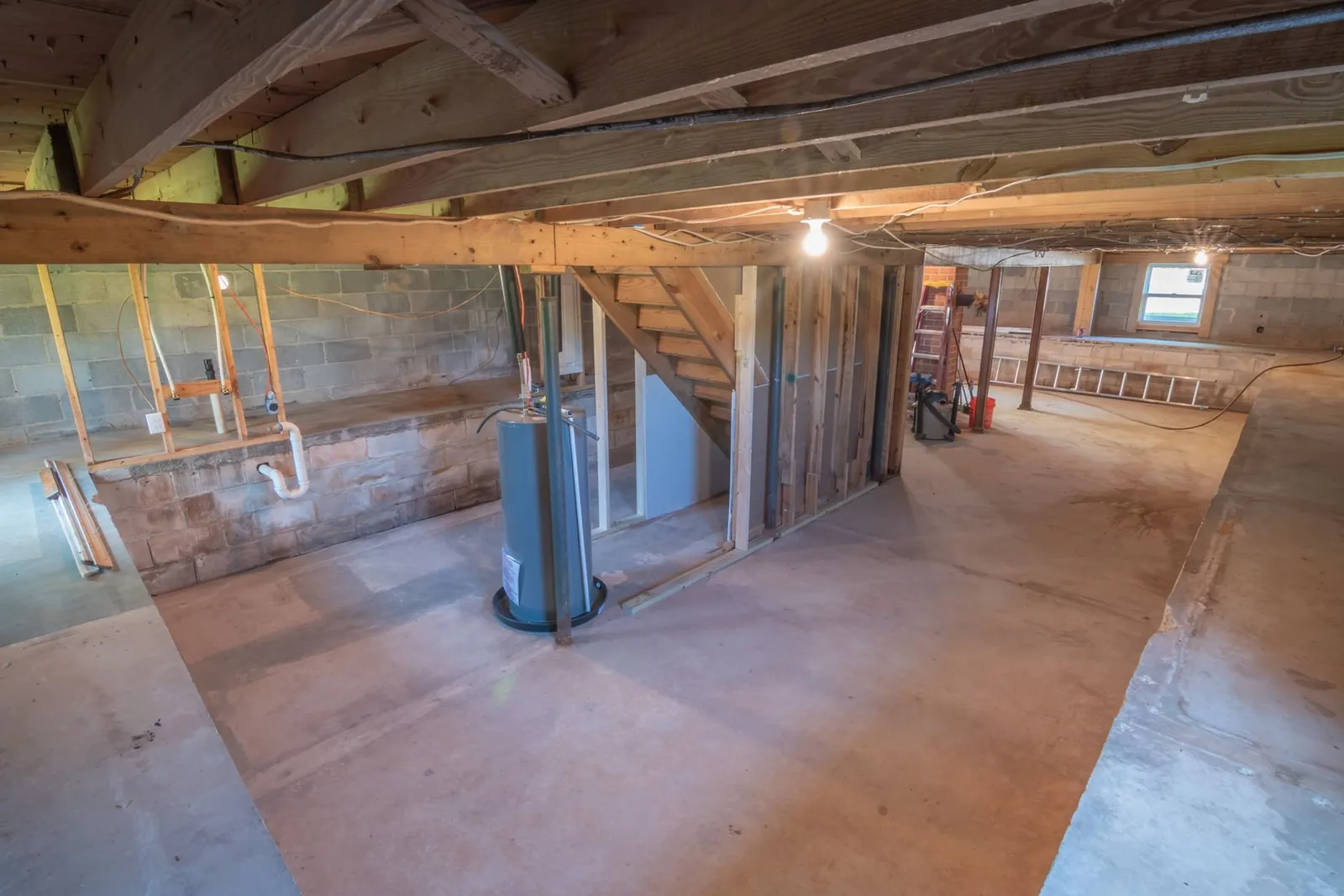
Many New Jersey basements have a furnace or boiler and a water heater sharing one chimney. When the heating unit is replaced with a high-efficiency model that vents out the side wall in plastic pipe, the water heater ends up as the only appliance in a flue built for two. Its small, cool exhaust struggles to rise, and condensation and spillage follow. The usual fix is a liner sized to the water heater alone, and it is one of the most common reasons an F-370 check turns up a liner.
FAQ
F-370 Chimney Check & Oil-to-Gas questions
Can I fill out the F-370 myself?
No. The form states it may not be submitted by a homeowner in lieu of the required inspection. The alternative it offers is to be home when the town inspector removes the vent connector and looks at the chimney.
What does the F-370 chimney check cost?
Our check is free, because it is our standard chimney inspection. If a camera scan is needed for a hidden problem, it is priced at the inspection. A liner for a furnace or water heater, when needed, typically runs $625 to $2,250.
Do I need a new liner when I switch from oil to gas?
Often, but not always. It depends on the flue size, its condition and what the new appliance needs. The F-370 asks the verifier to confirm the chimney is appropriately lined and sized, so we measure and tell you plainly either way.
My new boiler vents through the wall. Do I still need the form?
If the old and new appliances are both direct-vent, the form says no verification is required. If the old one used the chimney, or a water heater still does, the town may still want a check of that flue.
How soon can you come out?
We book Sunday to Friday in 3-hour windows (8 to 11, 11 to 2, 2 to 5) and call to confirm. Tell us when you book that a heating permit is waiting on the F-370 and we will offer the earliest window we have.
Related
Liners, caps, dampers and fireboxes

Book online
Pick a day. We'll bring a ladder.
Free inspection in a 3-hour window: 8 to 11, 11 to 2, or 2 to 5. We call to confirm before we arrive.