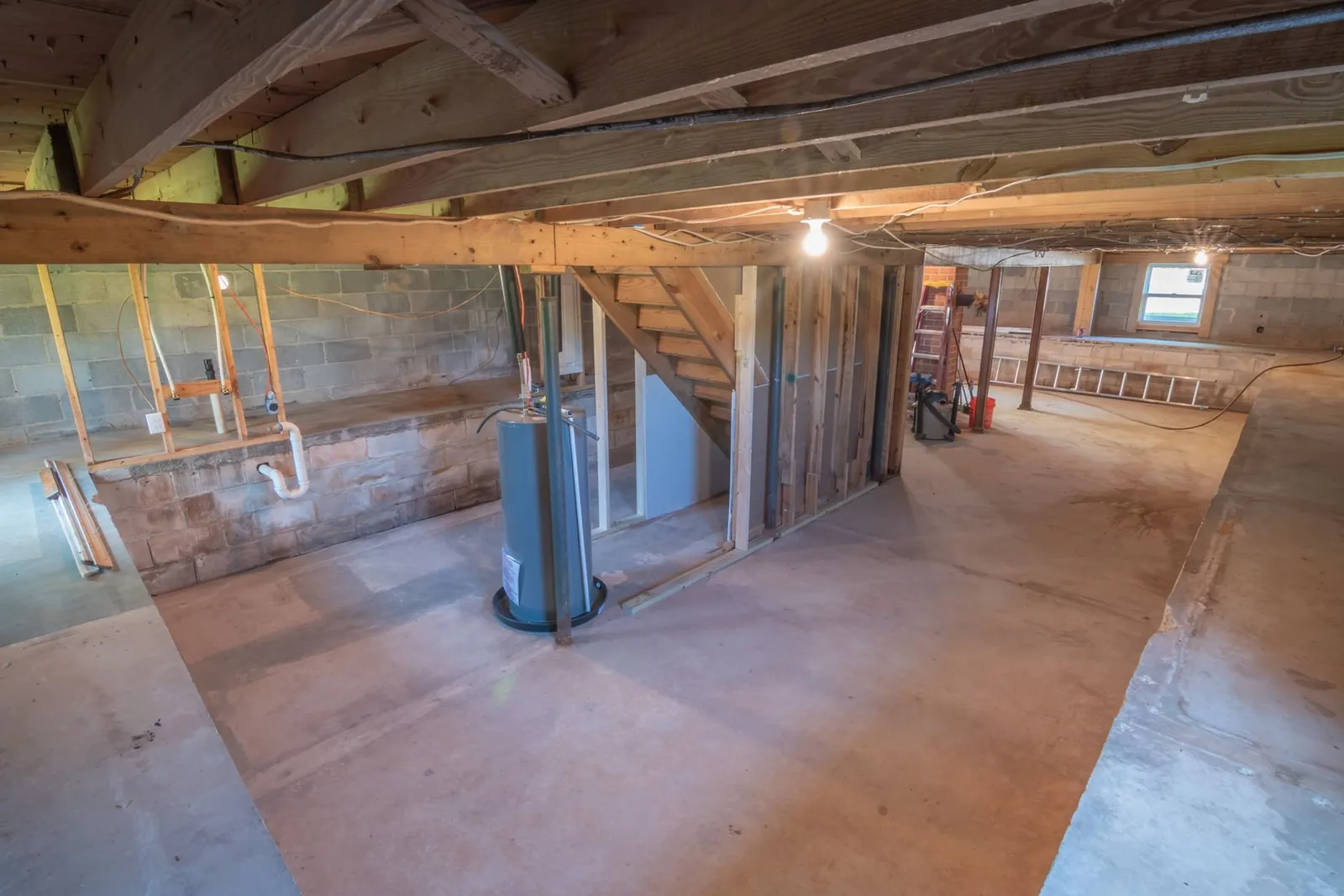
What is the New Jersey F-370 chimney verification?
F-370 is the state form a professional signs to confirm the chimney is sound, clear, clean, and lined and sized for the appliance before a replacement furnace, boiler or water heater is used. A homeowner can't sign it. It goes in with minor or emergency permits, otherwise before final inspection.
New Jersey Chimney Co. · October 12, 2026
The form in plain words
F-370 is a form from New Jersey's Uniform Construction Code, published by the Department of Community Affairs. Its full title is "Chimney Verification for Replacement of Fuel-Fired Equipment." It exists because a new heating appliance is only as safe as the chimney it breathes through, and chimneys are often decades older than the furnace or water heater being replaced.
The person who signs it is confirming three things. The chimney is in good repair and clear of obstruction. It is substantially clean of residue from its previous use, which matters a great deal after an oil burner. And it is appropriately lined and sized for the appliance or appliances that will use it. If any of those is not true, the chimney has to be fixed, cleaned or relined first, or the new appliance has to vent another way.
When you need one
The verification statements on the form cover the common situations: an oil or solid-fuel system converted to gas, an oil or gas appliance replaced with a new one, a solid-fuel appliance or fireplace, and direct-vent appliances. The form also says plainly that no verification is required when a direct-vent appliance is replaced with another direct-vent appliance, because neither one uses the chimney.
Towns explain it in their own words. Berkeley Township's handout says the form is needed for any gas appliance, boiler, water heater or furnace, with gas stoves the exception, before a minor-work or emergency permit is issued, and it points to N.J.A.C. 5:23-2.20(d). In practice, if a plumber or heating contractor is replacing a fuel-burning appliance that vents into a chimney, expect the town to ask for an F-370.
Who signs it, and when it is due
The form says it "may not be submitted by a homeowner in lieu of the required inspection." Berkeley Township's handout lists who can complete it: a chimney installer, a heating contractor or a master plumber. That is why your heating contractor may ask a chimney company to look at the flue before the new unit goes in.
Timing depends on the permit. For minor and emergency work, which covers many no-heat furnace and water heater swaps, the form must be provided with the permit application. For other work it is due before the final inspection. There is one alternative written on the form: you can skip submitting it if the homeowner is present so the inspector can remove and reinstall the vent connector and look for themselves.
If the chimney needs a liner
When a liner is installed, the form requires that all documentation on the liner accompany the permit application. That means the manufacturer, model, UL listing, whether it is stainless steel or aluminum, the sizes and the chimney height. Keep a copy; a future buyer's inspector may ask for it.
A liner sized for a new furnace or water heater typically costs $625–$2,250 in New Jersey. Coating-type relines are a different case: N.J.A.C. 5:23-2.7 lists the application of liquid-applied lining material inside an existing chimney as ordinary maintenance, while work affecting structural or fire safety is not. The state fire code adds that an unlined masonry chimney with open mortar joints that let smoke or gases into the house must be repaired or relined. We handle permits when your town requires them.
How our check works
The chimney check for the F-370 is our regular inspection, and it is free. We look at the flue from top to bottom, photograph what we find, and give you written findings for the form plus a written price for anything that needs fixing before the appliance is used.
- Book it before the new appliance is ordered if you can; liner size depends on the new unit.
- Have the new appliance's model or specification sheet handy.
- We work Sunday through Friday in three-hour windows (8–11, 11–2, 2–5) and call to confirm.
FAQ
More answers
Does a new gas stove need an F-370?
Berkeley Township's handout lists gas stoves as the exception. Ranges and cooktops are not what the form is about; furnaces, boilers and water heaters are.
My new furnace is direct-vent. Does the water heater still need a check?
If the water heater keeps venting into the old chimney, that chimney now has to be right for the water heater alone, and an old flue may be too big for it. We check that at the free inspection.
What happens if the chimney fails the check?
It gets cleaned, repaired or relined before the appliance is used, or the appliance is switched to a direct-vent model that does not use the chimney. You get a written price first.
Can my plumber sign the F-370?
Berkeley Township's handout lists a master plumber among the people who can complete it, along with chimney installers and heating contractors. The homeowner cannot.
Keep reading
More from the blog
 Does New Jersey require a chimney inspection to sell a house?No. New Jersey's sale certificate covers smoke alarms, CO alarms and a fire extinguisher, not the chimney. What sellers and buyers should do instead.
 Do I need a chimney liner when I convert from oil to gas in New Jersey?Switching from oil to gas in New Jersey brings an F-370 chimney check. When the old flue still works, when it needs a liner, and what liners typically cost.
 Do I need a carbon monoxide alarm if I have a gas fireplace in New Jersey?New Jersey counts a gas fireplace as a fuel-burning appliance, so the home needs CO alarms near the bedrooms. Where they go and how to keep it safe.
Book online
Pick a day. We'll bring a ladder.
Free inspection in a 3-hour window: 8 to 11, 11 to 2, or 2 to 5. We call to confirm before we arrive.