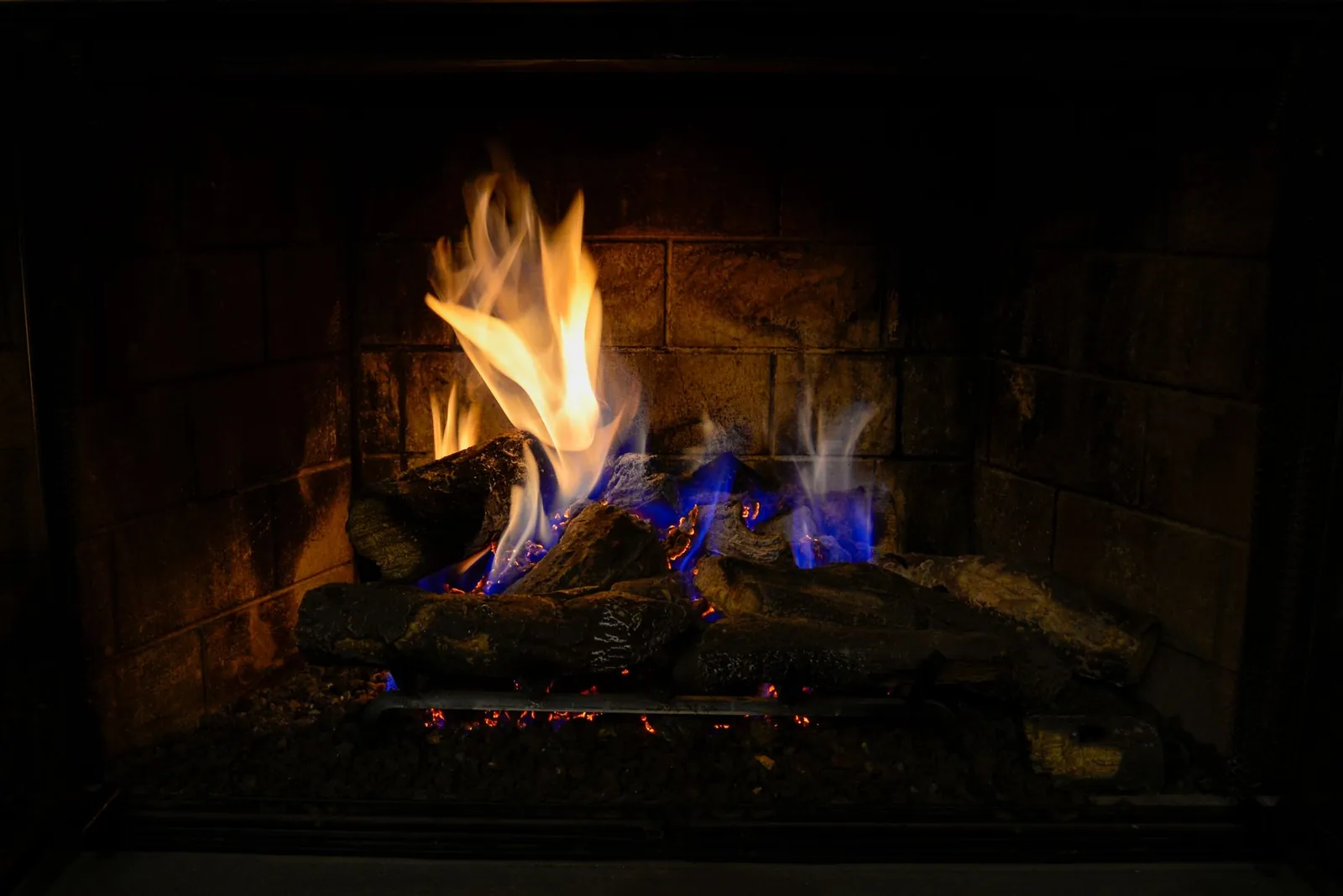
Gas Inserts and Gas Logs for Your Existing Fireplace
Gas logs bring flame to a wood fireplace for $500 to $2,000. A sealed direct-vent gas insert turns it into a real heater for $2,000 to $8,000 installed.
About 73 percent of New Jersey homes already heat with utility gas, so the question for most families is not whether gas is available but which kind of gas fireplace to put in. There are two main choices. Gas logs sit in the existing firebox and send their exhaust up the old chimney with the damper held open. A gas insert is a sealed box with a glass front that slides into the opening and vents through new pipes.
Logs are mostly about the look of a fire. They are quick to install and cost less, but most of the warmth they make escapes up the flue. An insert is a heater: it draws combustion air from outside, sends exhaust back out, and pushes warm air into the room, often with a thermostat or remote. Which one is right depends on whether you want ambiance or heat.
Signs you need this
- You stopped using the wood fireplace because of the work
- The open fireplace makes the room colder
- You want a fire with a switch or a remote
- You already have gas service in the house
- The firebox is sound but the chimney needs relining anyway
How we do it
- Measure and check the chimneyAt the free visit we measure the firebox and flue, check the chimney condition and find where the gas line would come in.
- Choose logs or insertWe go through the choices that fit your fireplace and give you a written price, including gas line and venting.
- Run gas and ventingA gas line is run to the fireplace under the permit. For an insert, two liners or a coaxial liner go up the chimney for intake and exhaust.
- Install and set upThe logs or insert go in, the controls are set up, and we fire it up with you and go over the remote and the shutoff.
Gas logs or a direct-vent insert: what is the difference in cost?
A gas log set installed typically runs $500 to $2,000, assuming the fireplace and chimney are sound. A direct-vent gas insert installed typically runs $2,000 to $8,000, depending on the unit, the venting length and the surround. A new gas line, if the fireplace has none, adds to either.
Vented logs need the damper permanently held partly open with a clamp, so they keep losing some heat even when off. A direct-vent insert is sealed from the room, so the old chimney stops leaking warm air.
Are gas inserts safe with children and pets?
A sealed insert keeps flame and exhaust behind glass and inside its own vent, which is the main safety advantage over an open fire. The glass gets hot, so most newer units come with a safety screen in front of it, and we recommend keeping it on.
Any gas fireplace counts as a fuel-burning appliance under New Jersey's CO alarm rule, as DCA Bulletin 99-3 shows in its own example. You need CO alarms near the bedrooms.
Do I need a permit for a gas insert in New Jersey?
A new gas appliance and the gas piping to it generally go through your town's construction office, and Berkeley Township's handout reads the F-370 chimney verification as required for any gas appliance other than a gas stove. We handle the permit when your town requires it and include the venting paperwork the inspector expects.
FAQ
Gas Inserts & Gas Logs questions
Can I put a gas insert in my wood fireplace?
Yes, in most masonry fireplaces. The chimney needs to be sound and swept first, and the insert vents through new liners up the flue.
Do I need gas logs or an insert to heat the room?
An insert. Vented logs are mostly for looks. A direct-vent insert is built to heat and many can run on a thermostat.
What if my house has no natural gas?
Many inserts and log sets can run on propane. In Sussex County only about a fifth of homes use utility gas, so propane installs are common there.
Do gas inserts need yearly service?
Yes. A yearly check of the pilot, burner, glass seal and vent keeps them lighting and burning clean. Service typically runs $150 to $350.
What if I want to burn wood again someday?
Yes. The insert and its liners come out, and the chimney is relined for wood. Most people who switch do not go back.
Related
Stoves, inserts and gas
Book online
Pick a day. We'll bring a ladder.
Free inspection in a 3-hour window: 8 to 11, 11 to 2, or 2 to 5. We call to confirm before we arrive.